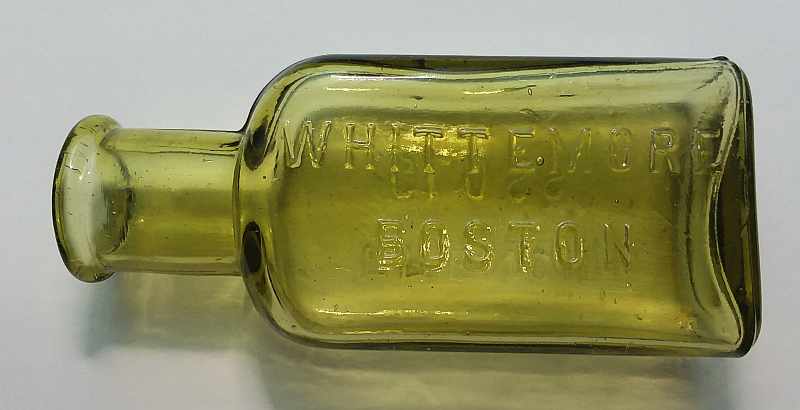
Whittemore / Boston / U.S.A.
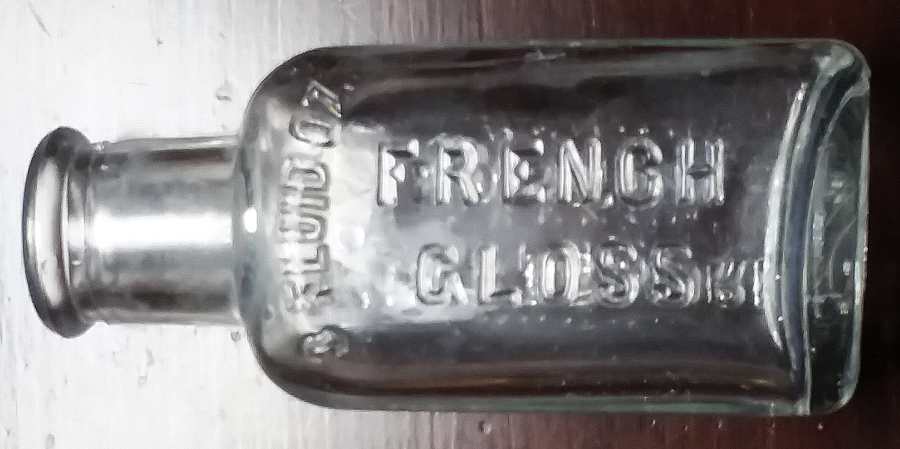
Whittemore / Boston // French Gloss
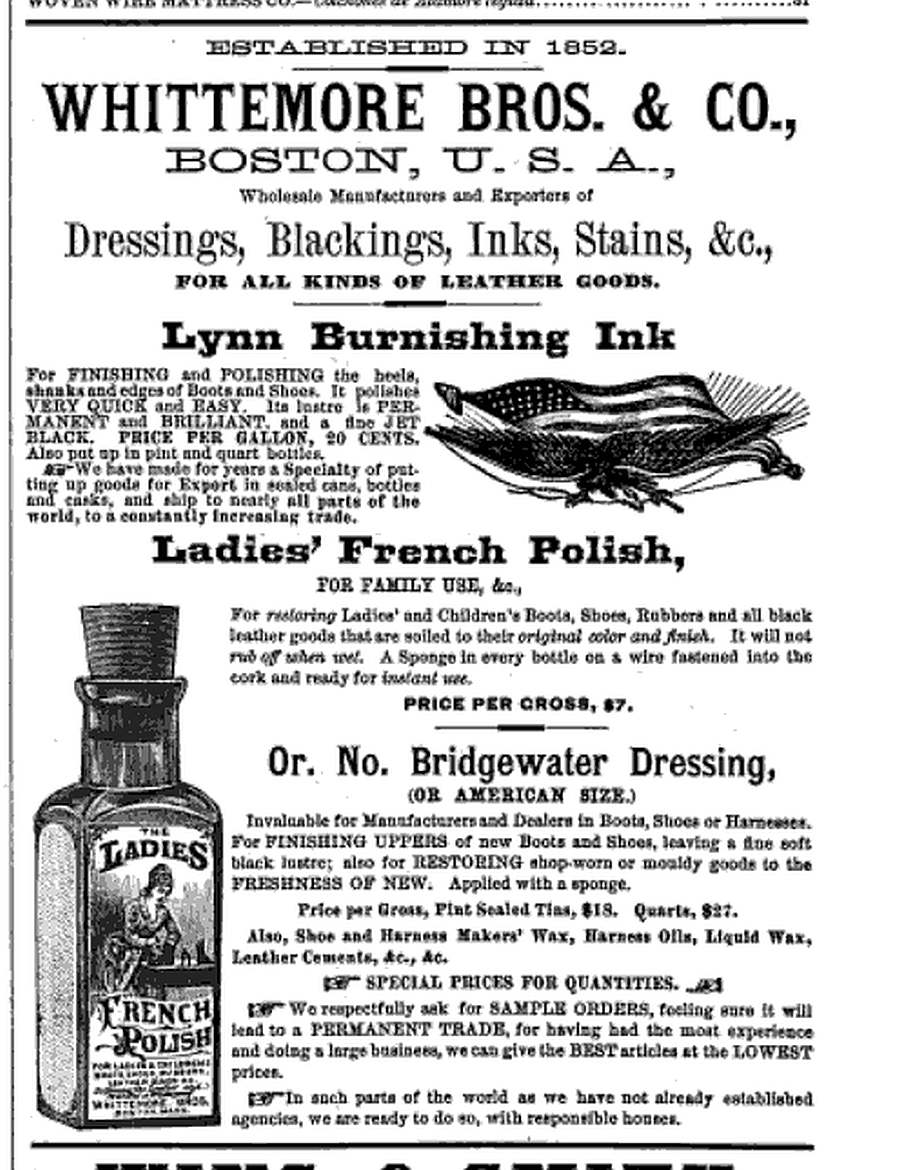
The name Whittemore was involved in the production and sale of blacking or “Shoe dressing” as far back as at least 1852 in the greater Boston area. Early records are confusing and sometimes contradictory, but apparently the first company was formed in about 1852 by David Whittemore and his brother Joshua Whittemore. The exact business name of the very first operation isn’t quite clear. It may have been simply listed as “David Whittemore” or “Whittemore Bros”.
David Whittemore lived in North Bridgewater, Massachusetts (that town was renamed Brockton in 1874). His full name was David Lawrence Whittemore (born November 18, 1818; died September 6, 1892). He married Urania Bassett (1823-1909) on Nov. 28, 1840 and they had 11 children between 1842 and 1863.
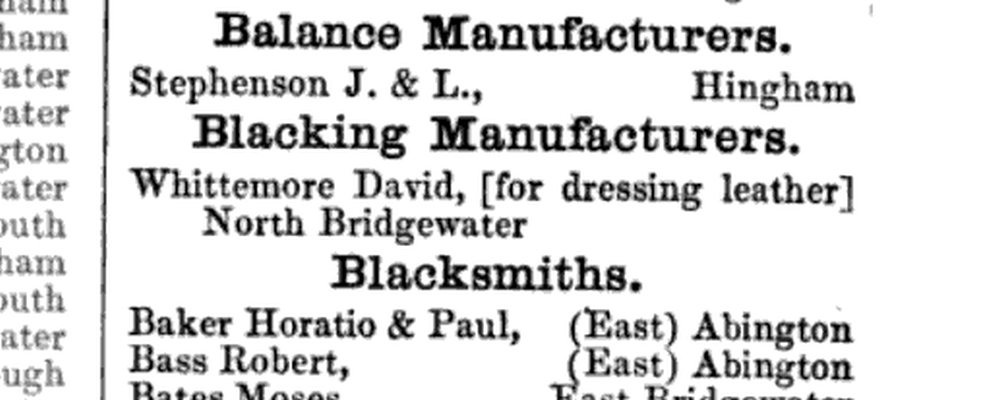
A brief listing (shown below, from the “Massachusetts Register” from 1856) indicates “David Whittemore” was a “Blacking Manufacturer” and (I assume) both his residence and the business were located in North Bridgewater at that time.
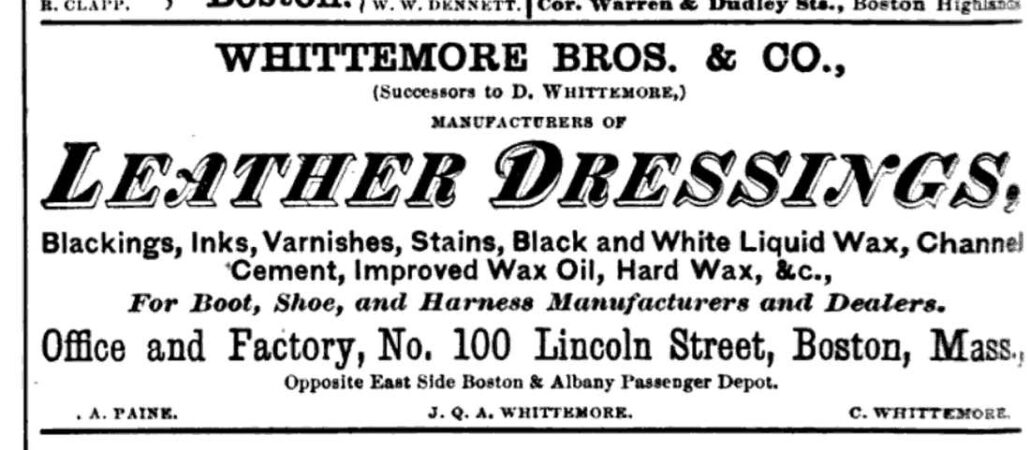
Sometime in the very late 1860s or (more likely) early 1870s the firm became “Whittemore Bros. & Company” and this concern was stated in ads (including an ad in the Boston Directory, 1873) as the “Successors to D. Whittemore”. The principals involved were John Q. A. Whittemore, Charles Whittemore (both sons of David) along with W. Augustus Paine.
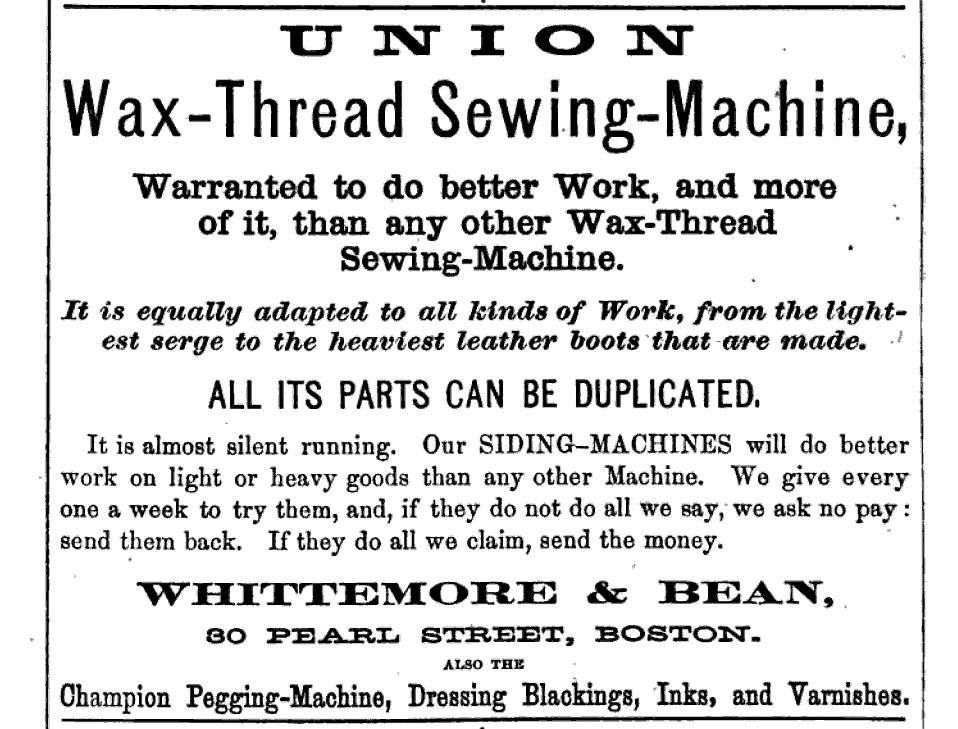
David Whittemore continued on for some time with a separate business that specialized in the manufacture and sale of various kinds of machinery involved in shoe making. For a time (years unclear) that concern was named “Whittemore & Bean”.
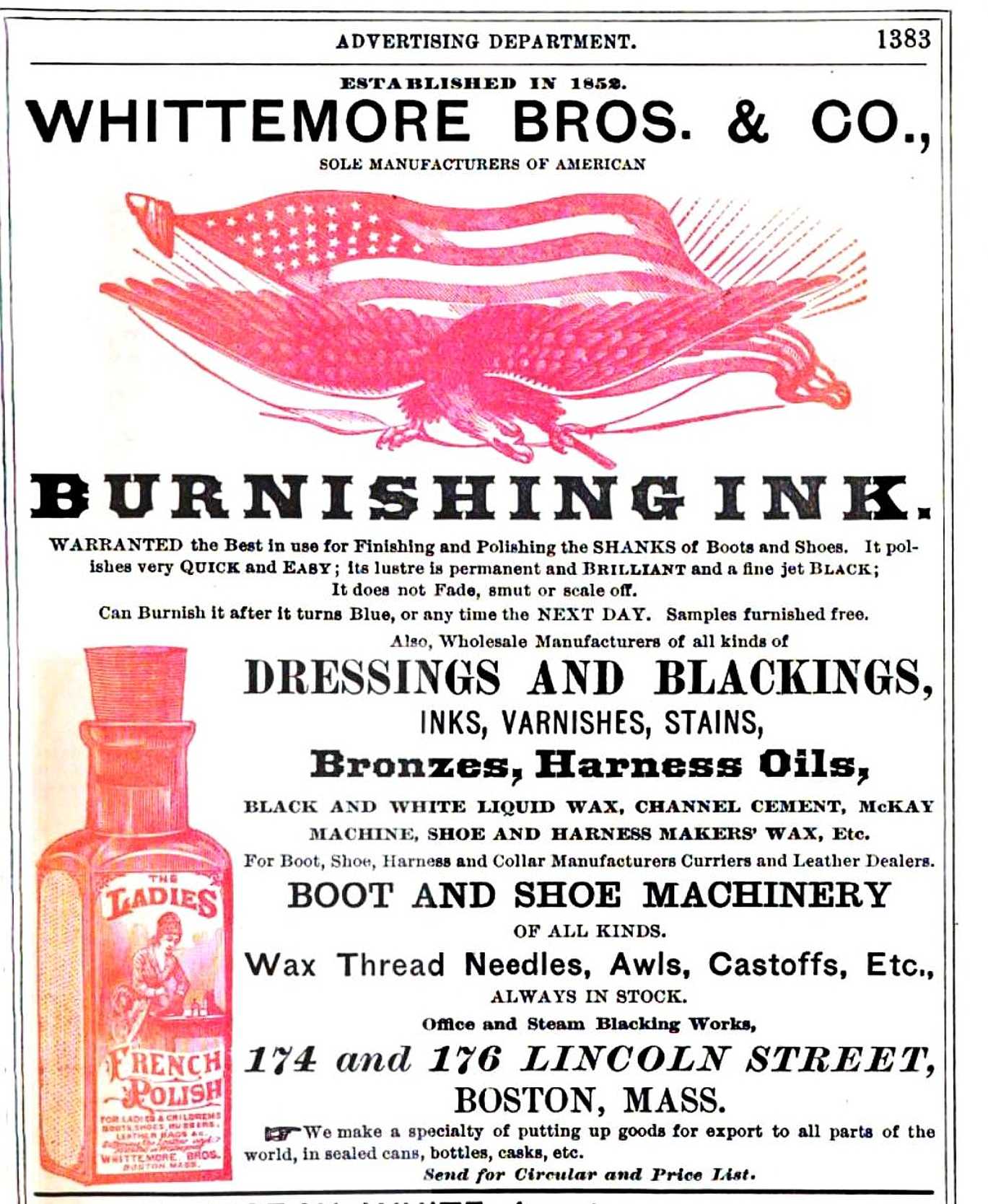
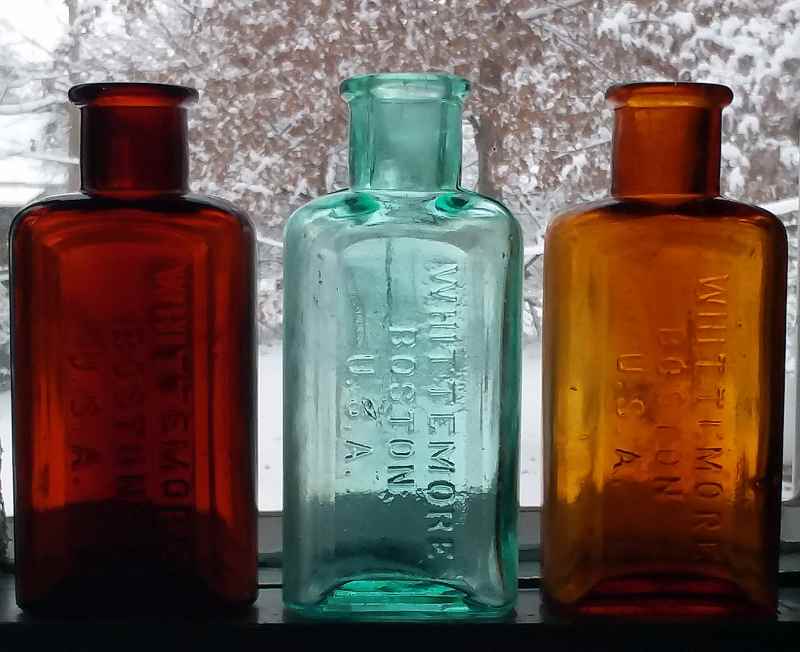
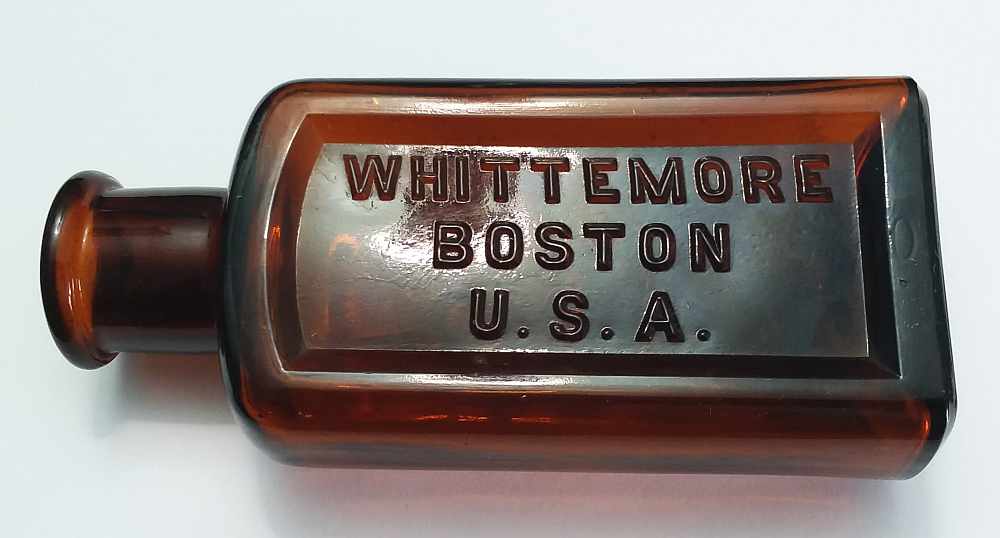
The majority of older Whittemore bottles are marked with either of the two embossing variations “WHITTEMORE / BOSTON / U.S.A.” or “WHITTEMORE / BOSTON // FRENCH GLOSS”.
The oldest variant is about five and 1/2 inches tall, holds 5 ounces, and has an indented rectangular panel or “frame” on the front. This type is handmade, and usually has a tooled lip, although the very oldest examples of this type may exhibit a more crudely formed “applied lip”.
The smaller rectangular size (holding three ounces, without indented panels) was probably introduced around the turn of the 20th century. A longtime bottle collector and digger (Jack Klotz, The Old Dirt Slinger on YouTube) has remarked that all, or virtually all, of the shorter, smaller (three ounce) sized Whittemore bottles (as in the type illustrated just below) apparently date from after approximately 1900, and are not typically seen when excavating into the deeper, older layers of dumps and privies.
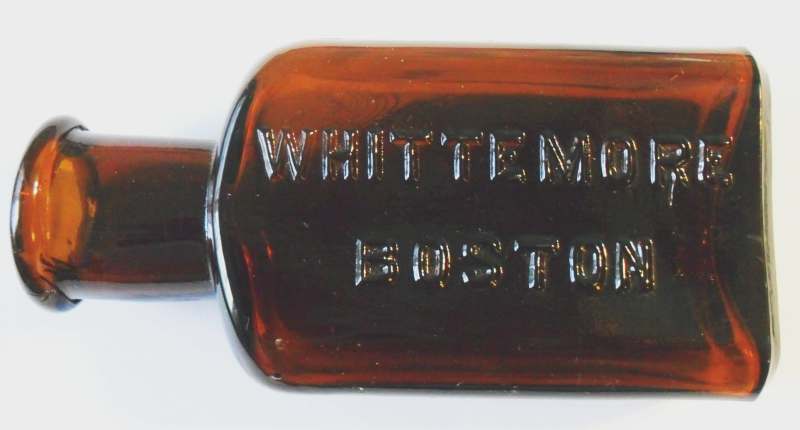
Most bottles with the “Whittemore” markings contained shoe polish (often called “shoe dressing” in the Victorian er a) and most were produced between about 1870 and 1940. There are no exact, clear-cut timelines for these bottles.
Please note that the very oldest bottles that held Whittemore products were almost certainly unembossed, likely plain “generic” cylindrical, rectangular or square bottles without markings. Most of that category cannot now be identified since the labels are typically missing. The first marked (embossed) bottles may date from about 1873 but there is no solid documentation to prove EXACTLY when they were first produced. Various Whittemore shoe blacking products were still being sold as late as about 1948, if not later.
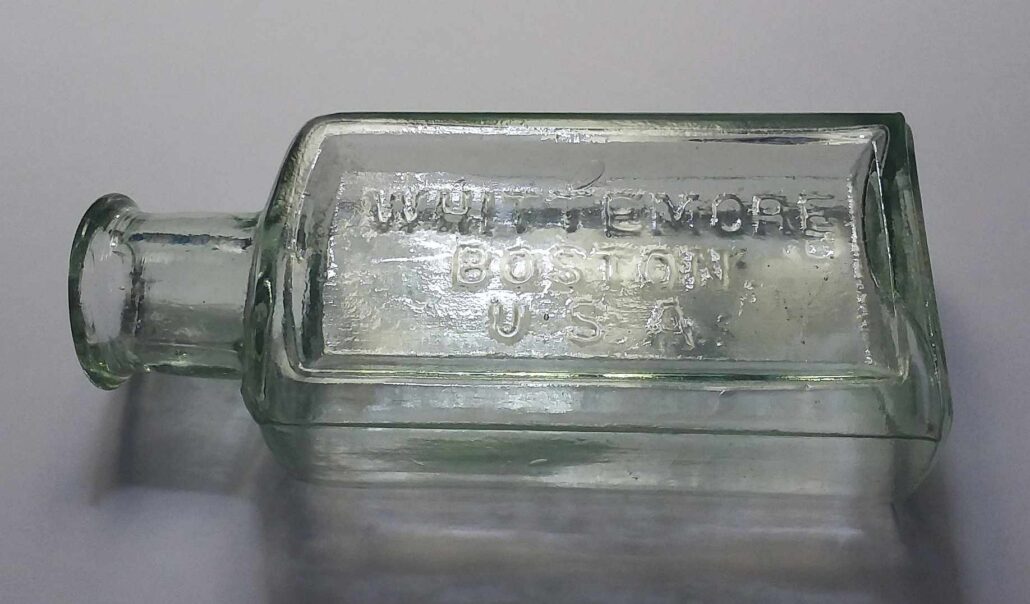
There are a number of minor variations among the Whittemore bottles; most are of a rectangular shape, although some of a somewhat later time period are cylindrical. For instance, one type of cylindrical bottle is marked “WHITTEMORE / POLISH” around the shoulder and was made in clear glass. Whittemore bottles have been found in many colors, including aqua (the most common color), light bluish- aqua, green-aqua, clear, off clear (gray tint), pale sun-colored amethyst (SCA), light green, ice green, several shades of amber – including a medium orange amber and a dark “chocolate amber”, and citron (chartreuse).
One of the earlier lines of shoe dressing sold by Whittemore was their so-called “Gilt Edge Dressing”, and some bottles from the 1890s are found with this embossing on the front. This decorative style of Gilt Edge Dressing bottle has a repeated Maltese-cross-style raised design vaguely reminiscent of the “Finecut” pattern popular in some Early American pattern glass tableware.
ADVERTISEMENT
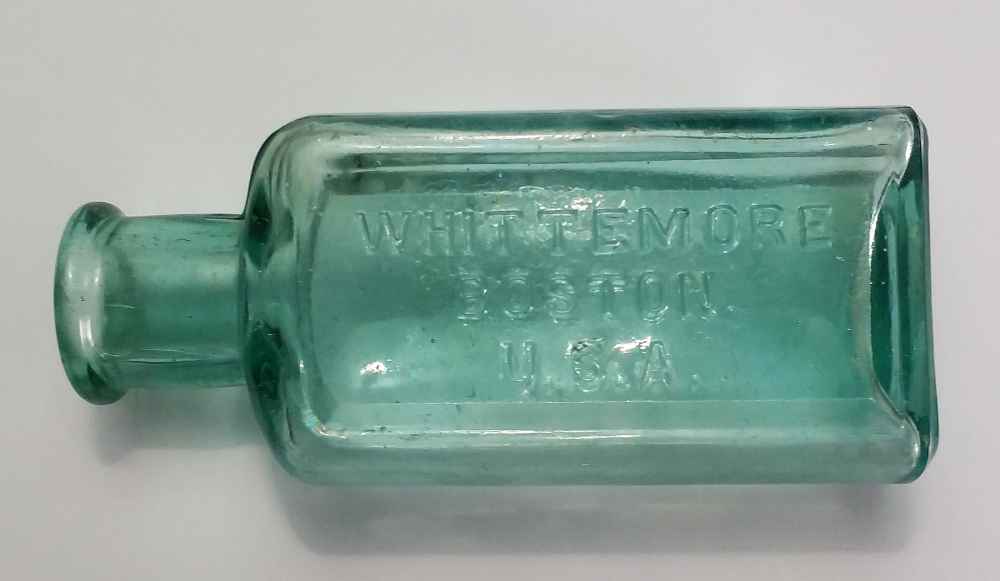
A nice collection of different Whittemore bottles can be assembled because of their variety in color, size, age, and exact lettering arrangement. Earlier versions, of course, are handblown. Most later versions (generally, after the 1910s or 1920s) are machine-made. A machine-made bottle will have vertical mold seams that extend all the way up to the very top of the lip. Mouthblown (handmade) bottles have two vertical mold seams that fade out or end at some point before reaching the top.
Although there is no absolute proof concerning glassmakers, I have been told that it is highly likely that some, if not many, of the earlier bottles were made at the Lyndeborough Glass Company works in South Lyndeboro, New Hampshire (1866-1888). Of course, huge numbers of Whittemore bottles were made after 1888, so other (unidentified) bottle manufacturers were also involved with their production.
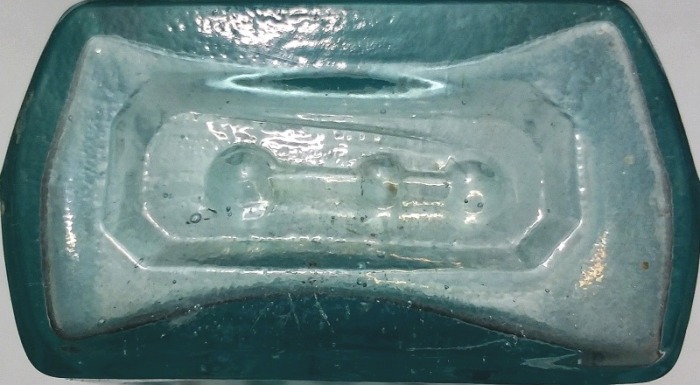
Many of the earlier examples have mold numbers, or arrangements of raised bumps or dots on the base which served to identify the molds in use within the factory, but (in general) cannot indicate any specific glass manufacturer. There are many early Whittemore bottles that have no markings at all on the bottom.
Here is a keyword search link for ebay listings with WHITTEMORE in the subject heading: Ebay Whittemore bottle search
This webpage (on Mike Cavanaugh’s website “BAY BOTTLES”) has some more well-researched information on Whittemore, including business addresses, and he includes a number of photos showing other types of containers used for Whittemore products:
Whittemore, Boston, French Gloss
For an extensive list of glass manufacturers’ marks seen on bottles, fruit jars, insulators, tableware and other items, please click here to go to the GLASS BOTTLE MARKS pages, page one.
Click here to go to my Home Page.
ADVERTISEMENT
Not sure if this is the right place to be asking ….I got a cobalt blue Bromo seltzer bottle. On the bottom of it is the number 27, on the side it says Bromo Seltzer Emerson Drug co Baltimore.
Hi Steven,
My webpage on the Bromo Seltzer bottles is at this link: Bromo-Seltzer~Cobalt Blue Bottles~Brief History. The “27” on the bottom is a mold number and doesn’t tell us about the age of the bottle. Take care,
David
I have a clear Whittemore French Gloss 3oz bottle marked with the Hazel-Atlas mark, mold 7 on the bottle. My question is : Does the cork style top narrow down the production date of this bottle?
~Thanks in advance for any info
Hi Tom,
I don’t know what date range the cork-style bottles were made. But I would guess they were being phased out by sometime in the 1930s-1940s. Sorry I don’t have better info for you.
David
I found a partial bottle of French Gloss the bottom is missing. It has 3 Fluid Oz. on the top and looks like it had a cork top that went to it. Do you know about what year this was made?
I really appreciate the info you’ve shared!
My husband found one of these bottles in a light turquoise and iridescent sheen. No cork or numbers but there is a long dash on bottom of bottle. Does this help date this?
Hi Tami,
I think some of those raised lines, bumps or dashes seen on some of the Whittemore bottles served merely as mold identifiers, equivalent to a number or letter. I am assuming yours is an older type, handblown with a tooled lip.
I would guess that your bottle dates from sometime in the 1880-1920 time period. I know that doesn’t narrow it down much, but I really can’t be sure of pinpointing the dating on most of those bottles.
Take care,
David
I am a Whittemore. I have had two bottles given to me years ago. One is clear greenish with a 2 on the bottom and has a cork and swab in it. The other is more weathered, with two raised dotts on the bottom. No cork in that one. It’s fun finding this site.
My mother was a Whittemore from Dixfield, Maine. My grandfather was Bill Whittemore; there was 12 children in his family. I was told he was related to the Whittemore shoe polish company. Do you know of the oldest man in the American Revolution 1775 Samuel Whittemore. I have Whittemore shoe polish bottles & a 1898 postcard from Whittemore Brothers & CO. Address 237, 239, 241 & 243 Albany St. Boston Mass. sent to Halifax N S .
My father, raised in NY, had a tool, which my son now has, which was a combination hammer/hatchet with a forked top for removing nails. Tool is solid steel thought the handle with two wooden slabs/scales attached on either side. On one side it was marked “Iroquois” on the other side “Use Whittmore Shoe Polish” !
I know this site is re. bottle – but if you could suggest where I could find info on this tool, I’d really appreciate it. Thank You. Jim
Jim, I don’t know anything about the tool you describe. Perhaps someone will see your post and comment on it! Thanks for writing,
David
Sounds like a multitool made by Iroquois with some advertising added after
Sounds like a cobbler’s (shoemaker) hammer. Probably Whittemore paid to have an ad on it. Seen one on an online auction. Fork was on the top, then a hammer/hatchet device down the shaft. On the one I viewed the metal twisted just above where the wooden sides were affixed.
I just found a WHITTEMORE BOSTON U.S.A. bottle with NO.1 stamped on the bottom. Does #1 mold make it any more significant of a find?
Hi Gordon,
No, it is just a mold number which has no significance or impact on value. Many mold numbers were used over the years. A mold number “1” (one) doesn’t necessarily mean that it was the first mold used. It just means it was one of several molds within a particular “numbered mold set” being used during a particular period of time. There may be a number of different molds used throughout the years that happen to have the number “1” on them. This is true of many, many bottles and jars of various types and brands that have been made over the last 100 years or more. Hope this helps!
David
I have a shipping box from Whittemore it says 1 dozen Baby Elite Myg by Whittemore Bros&Co Boston,USA
I have a Whittlemore Boston U. S. A. bottle with. 6 or a 9 on the bottom and states 5 fluid oz. However does not say shoe dressing on it anywhere.
Dawne, as far as I know, the WHITTEMORE bottles don’t have the actual wording “SHOE DRESSING” embossed in the glass. A paper label which would have originally been affixed to the bottles would have provided more information, including the brand and the words “Shoe polish” or “Shoe dressing” on them. Your example with the mold number on the base and the “5 fluid Oz” is one of the later versions, possibly from sometime in the 1910s-1940s.
~David
Thanks that is very helpful!!!
My bottle is rectangular; it say’s Whittemore’s Shoe Polish (you have to hold the bottle horizontally to read it). It has a very rusty screw cap, and just below it says 13/4 oz. It has the remnants of white polish inside. The bottle is clear. On the bottom it has L-8546. The letter A inside what looks like an upside down U and the #6 to the right of that. Any information year, value would be appreciated. Thanks,
Tom, that particular bottle was made by Hazel-Atlas Glass Company, judging from the mark you describe. Please check out my webpage on that company. The Whittemore polish bottles were made over many, many years and I cannot tell you what year your bottle was made. With a screw-type lid, it might date from the 1930s-1950s. The “L-8546” is a number that was probably assigned to that bottle mold (or style) by Hazel-Atlas. I prefer not to discuss values, but readers continue to ask me about them. The value to antique bottle collectors is very low, perhaps 50 cents to a dollar.
[Edit- was referring here to screw-type bottles in clear glass, but other, older style bottles and in various colors can have much higher values depending on the exact shade of color and the particular bottle variant in question].
Best regards,
David
I found one quite similar to Tom’s. The only difference is that on the bottom it has “L-8540” and the number “7” instead of six. It still has a little bit of white polish left in it as well. I just found it today in my creek. It is in nearly perfect condition. Its really amazing. I thought it was a glass liquor bottle at first. 😂
I have a Whittemore bottle with the “B” in Boston without the final line in the “B” so it looks more like a “C”. Unique? We obviously know it’s supposed to be a “B” but still looks like a “C” to me. Found in a house built in Bethel, CT. in the 1880’s. Thanks, Dan
Dan, you have an example of a mold-making error. I don’t know how common that variant is.
~David
David, thanks for your response. Any idea of who the expert on Whittemore is?
Dan
Dan, I don’t know, but you might try posting queries on the Antique-Bottles.net discussion website, where lots of bottle collectors hang out. There may be some Whittemore specialists there who can shed more light on the bottle.
Best regards, David
I have one with the number 21 is this an original just wondering.
Julia,
I don’t know of any Whittemore bottles being reproduced. Many slightly different mold varieties are known and, in general, Whittemore shoe polish bottles are considered to be very common by collectors. I am sure you have an authentic Whittemore bottle. The “21” would be a mold number.
Best regards,
David